
Articles | Volume 7, issue 1
https://doi.org/10.5194/mr-7-29-2026
© Author(s) 2026. This work is distributed under
the Creative Commons Attribution 4.0 License.
the Creative Commons Attribution 4.0 License.
https://doi.org/10.5194/mr-7-29-2026
© Author(s) 2026. This work is distributed under
the Creative Commons Attribution 4.0 License.
the Creative Commons Attribution 4.0 License.
Research article
| 
16 Apr 2026
Research article |
| 16 Apr 2026
| 16 Apr 2026
Accelerated 19F biomolecular magic-angle spinning NMR with paramagnetic dopants
Lea M. Becker
Institute of Science and Technology Austria, Am Campus 1, 3400 Klosterneuburg, Austria
Giorgia Toscano
Institute of Science and Technology Austria, Am Campus 1, 3400 Klosterneuburg, Austria
Institute of Organic Chemistry, University of Vienna, Währinger Str. 38, 1090 Vienna, Austria
Anna Kapitonova
Institute of Science and Technology Austria, Am Campus 1, 3400 Klosterneuburg, Austria
Rajkumar Singh
Institute of Science and Technology Austria, Am Campus 1, 3400 Klosterneuburg, Austria
Undina Guillerm
Institute of Science and Technology Austria, Am Campus 1, 3400 Klosterneuburg, Austria
Roman J. Lichtenecker
Institute of Organic Chemistry, University of Vienna, Währinger Str. 38, 1090 Vienna, Austria
Institute of Science and Technology Austria, Am Campus 1, 3400 Klosterneuburg, Austria
Related authors
Kathrin Aebischer, Lea Marie Becker, Paul Schanda, and Matthias Ernst
Magn. Reson., 5, 69–86, https://doi.org/10.5194/mr-5-69-2024, https://doi.org/10.5194/mr-5-69-2024, 2024
Short summary
Short summary
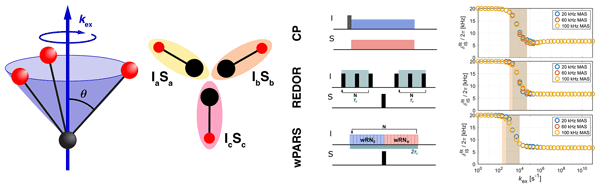
To characterize the amplitude of dynamic processes in molecules, anisotropic parameters can be measured using solid-state NMR. However, the timescales of motion that lead to such a scaling of the anisotropic interactions are not clear. Using numerical simulations in small spin systems, we could show that mostly the magnitude of the anisotropic interaction determines the range of timescales detected by the scaled anisotropic interaction, and experimental parameters play a very minor role.
Lucky N. Kapoor, Natália Ružičková, Predrag Živadinović, Valentin Leitner, Maria Anna Sisak, Cecelia Mweka, Jeroen Dobbelaere, Georgios Katsaros, and Paul Schanda
Magn. Reson., 6, 243–256, https://doi.org/10.5194/mr-6-243-2025, https://doi.org/10.5194/mr-6-243-2025, 2025
Short summary
Short summary
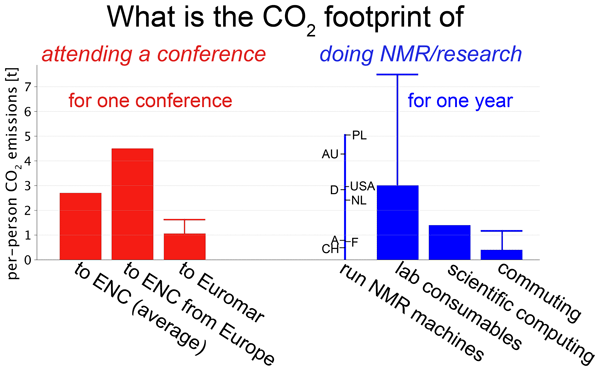
By reviewing attendee lists of 10 MR (magnetic resonance) meetings over the last year, we estimate the climate footprint of conferences and explore possibilities to reduce it. This paper will facilitate discussions about possible actions the community may take.
Kathrin Aebischer, Lea Marie Becker, Paul Schanda, and Matthias Ernst
Magn. Reson., 5, 69–86, https://doi.org/10.5194/mr-5-69-2024, https://doi.org/10.5194/mr-5-69-2024, 2024
Short summary
Short summary
To characterize the amplitude of dynamic processes in molecules, anisotropic parameters can be measured using solid-state NMR. However, the timescales of motion that lead to such a scaling of the anisotropic interactions are not clear. Using numerical simulations in small spin systems, we could show that mostly the magnitude of the anisotropic interaction determines the range of timescales detected by the scaled anisotropic interaction, and experimental parameters play a very minor role.
Federico Napoli, Jia-Ying Guan, Charles-Adrien Arnaud, Pavel Macek, Hugo Fraga, Cécile Breyton, and Paul Schanda
Magn. Reson., 5, 33–49, https://doi.org/10.5194/mr-5-33-2024, https://doi.org/10.5194/mr-5-33-2024, 2024
Short summary
Short summary
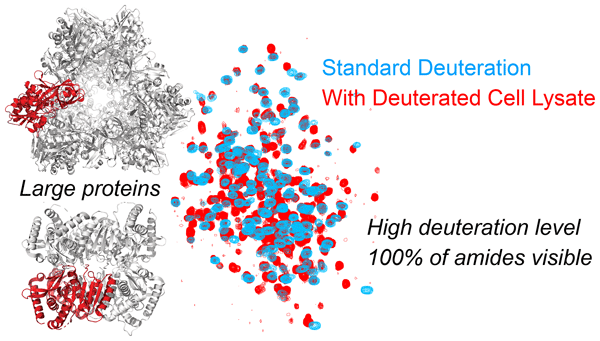
Protons (1H) are useful reporters of protein structure and dynamics in solid-state NMR. However, 1H abundance is detrimental to the resolution of NMR spectra. Substituting 1H by deuterons has been an efficient strategy to improve spectral quality, but when the crucial backbone amide sites are not protonated, much information is loss. We propose a method to completely protonate the amide sites, while maintaining high-resolution information, which partially also extends to backbone alpha-1H.
Cited articles
Becker, L. M. and Schanda, P.: Research data for `Accelerated 19F biomolecular magic-angle spinning NMR with paramagnetic dopants', Institute of Science and Technology Austria [data set], https://doi.org/10.15479/AT-ISTA-21284, 2026. a
Bertini, I., Luchinat, C., and Giacomo, P. (Eds.): Solution NMR of Paramagnetic Molecules: Applications to Metallobiomolecules and Models, vol. 2 of Curr. Methods Inorg. Chem., Elsevier, ISBN 978-0-444-20529-2, 2001. a
Bloembergen, N. and Morgan, L. O.: Proton relaxation times in paramagnetic solutions. Effects of electron spin relaxation, J. Chem. Phys., 34, 842–850, https://doi.org/10.1063/1.1731684, 1961. a
Boeszoermenyi, A., Chhabra, S., Dubey, A., Radeva, D. L., Burdzhiev, N. T., Chanev, C. D., Petrov, O. I., Gelev, V. M., Zhang, M., Anklin, C., Kovacs, H., Wagner, G., Kuprov, I., Takeuchi, K., and Arthanari, H.: Aromatic 19F-13C TROSY: a background-free approach to probe biomolecular structure, function, and dynamics, Nat. Methods, 16, 333–340, https://doi.org/10.1038/s41592-019-0334-x, 2019. a
Bondarenko, V., Wells, M. M., Chen, Q., Singewald, K. C., Saxena, S., Xu, Y., and Tang, P.: 19F Paramagnetic Relaxation-Based NMR for Quaternary Structural Restraints of Ion Channels, ACS Chem. Biol., 14, 2160–2165, https://doi.org/10.1021/acschembio.9b00692, 2019. a
Borissenko, L. and Groll, M.: Crystal structure of TET protease reveals complementary protein degradation pathways in prokaryotes, J. Mol. Biol., 346, 1207–1219, https://doi.org/10.1016/j.jmb.2004.12.056, 2005. a
Caravan, P., Ellison, J. J., McMurry, T. J., and Lauffer, R. B.: Gadolinium(III) chelates as MRI contrast agents: Structure, dynamics, and applications, Chem. Rev., 99, 2293–2352, https://doi.org/10.1021/cr980440x, 1999. a
Duan, P., Dregni, A. J., and Hong, M.: Solid-State NMR 19F-1H-15N Correlation Experiments for Resonance Assignment and Distance Measurements of Multifluorinated Proteins, J. Phys. Chem. A, 126, 7021–7032, https://doi.org/10.1021/acs.jpca.2c05154, 2022. a, b, c
Gauto, D. F., Estrozi, L. F., Schwieters, C. D., Effantin, G., Macek, P., Sounier, R., Sivertsen, A. C., Schmidt, E., Kerfah, R., Mas, G., Colletier, J. P., Güntert, P., Favier, A., Schoehn, G., Schanda, P., and Boisbouvier, J.: Integrated NMR and cryo-EM atomic-resolution structure determination of a half-megadalton enzyme complex, Nat. Commun., 10, 2697, https://doi.org/10.1038/s41467-019-10490-9, 2019a. a
Gauto, D. F., Macek, P., Barducci, A., Fraga, H., Hessel, A., Terauchi, T., Gajan, D., Miyanoiri, Y., Boisbouvier, J., Lichtenecker, R., Kainosho, M., and Schanda, P.: Aromatic Ring Dynamics, Thermal Activation, and Transient Conformations of a 468 kDa Enzyme by Specific 1H-13C Labeling and Fast Magic-Angle Spinning NMR, J. Am. Chem. Soc., 141, 11183–11195, https://doi.org/10.1021/jacs.9b04219, 2019b. a
Gauto, D. F., Macek, P., Malinverni, D., Fraga, H., Paloni, M., Sučec, I., Hessel, A., Bustamante, J. P., Barducci, A., and Schanda, P.: Functional control of a 0.5 MDa TET aminopeptidase by a flexible loop revealed by MAS NMR, Nat. Commun., 13, 1927, https://doi.org/10.1038/s41467-022-29423-0, 2022. a
Goddard, T. D. and Kneller, D. G.: SPARKY 3, University of California, San Francisco, https://www.cgl.ucsf.edu/home/sparky/ (last access: 5 February 2024), 2008. a
Gronenborn, A. M.: Small, but powerful and attractive: 19F in biomolecular NMR, Structure, 30, 6–14, https://doi.org/10.1016/j.str.2021.09.009, 2022. a
Heller, G. T., Shukla, V. K., Figueiredo, A. M., and Hansen, D. F.: Picosecond Dynamics of a Small Molecule in Its Bound State with an Intrinsically Disordered Protein, J. Am. Chem. Soc., 146, 2319–2324, https://doi.org/10.1021/jacs.3c11614, 2024. a
Helmus, J. J. and Jaroniec, C. P.: Nmrglue: An open source Python package for the analysis of multidimensional NMR data, J. Biomol. NMR, 55, 355–367, https://doi.org/10.1007/s10858-013-9718-x, 2013. a
Hocking, H. G., Zangger, K., and Madl, T.: Studying the structure and dynamics of biomolecules by using soluble paramagnetic probes, Chem. Phys. Chem., 14, 3082–3094, https://doi.org/10.1002/cphc.201300219, 2013. a
Huang, Y., Wang, X., Lv, G., Razavi, A. M., Huysmans, G. H., Weinstein, H., Bracken, C., Eliezer, D., and Boudker, O.: Use of paramagnetic 19F NMR to monitor domain movement in a glutamate transporter homolog, Nat. Chem. Biol., 16, 1006–1012, https://doi.org/10.1038/s41589-020-0561-6, 2020. a
Jaroniec, C. P.: Solid-state nuclear magnetic resonance structural studies of proteins using paramagnetic probes, Solid State Nucl. Magn. Reson., 43-44, 1–13, https://doi.org/10.1016/j.ssnmr.2012.02.007, 2012. a
Juen, F., Glänzer, D., Plangger, R., Kugler, V., Fleischmann, J., Stefan, E., Case, D. A., Kovacs, H., Dayie, T. K., and Kreutz, C.: Enhanced TROSY Effect in [2-19F, 2-13C] Adenosine and ATP Analogs Facilitates NMR Spectroscopy of Very Large Biological RNAs in Solution, Angew. Chem. Int. Ed., 63, e202316273, https://doi.org/10.1002/anie.202316273, 2024. a
Karschin, N., Krenek, S., Heyer, D., and Griesinger, C.: Extension and improvement of the methanol-d4 NMR thermometer calibration, Magn. Reson. Chem., 60, 203–209, https://doi.org/10.1002/mrc.5216, 2022. a
Konig, S. H.: A classical description of relaxation of interacting pairs of unlike spins: Extension to T1ρ, T2, and T1ρoff, including contact interactions, J. Magn. Reson., 47, 441–453, https://doi.org/10.1016/0022-2364(82)90211-6, 1982. a
Linser, R., Chevelkov, V., Diehl, A., and Reif, B.: Sensitivity enhancement using paramagnetic relaxation in MAS solid-state NMR of perdeuterated proteins, J. Magn. Reson., 189, 209–216, https://doi.org/10.1016/j.jmr.2007.09.007, 2007. a, b
Lu, X., Lu, X., Tsutsumi, Y., Huang, C., Xu, W., Byrn, S. R., Templeton, A. C., Buevich, A. V., Amoureux, J. P., Amoureux, J. P., Amoureux, J. P., Su, Y., Su, Y., and Su, Y.: Molecular packing of pharmaceuticals analyzed with paramagnetic relaxation enhancement and ultrafast magic angle pinning NMR, Phys. Chem. Chem. Phys., 22, 13160–13170, https://doi.org/10.1039/d0cp02049d, 2020. a, b
Luck, L. A., Vance, J. E., O'Connell, T. M., and London, R. E.: 19F NMR relaxation studies on 5-fluorotryptophan- and tetradeutero-5-fluorotryptophan-labeled E. coli Glucose/Galactose Receptor, J. Biomol. NMR, 7, 261–272, https://doi.org/10.1007/BF00200428, 1996. a
Matei, E. and Gronenborn, A. M.: 19F Paramagnetic Relaxation Enhancement: A Valuable Tool for Distance Measurements in Proteins, Angew. Chem. Int. Ed., 55, 150–154, https://doi.org/10.1002/anie.201508464, 2016. a
Mroue, K. H., Zhang, R., Zhu, P., McNerny, E., Kohn, D. H., Morris, M. D., and Ramamoorthy, A.: Acceleration of natural-abundance solid-state MAS NMR measurements on bone by paramagnetic relaxation from gadolinium-DTPA, J. Magn. Reson., 244, 90–97, https://doi.org/10.1016/j.jmr.2014.04.020, 2014. a
Öster, C., Kosol, S., Hartlmüller, C., Lamley, J. M., Iuga, D., Oss, A., Org, M. L., Vanatalu, K., Samoson, A., Madl, T., and Lewandowski, J. R.: Characterization of Protein-Protein Interfaces in Large Complexes by Solid-State NMR Solvent Paramagnetic Relaxation Enhancements, J. Am. Chem. Soc., 139, 12165–12174, https://doi.org/10.1021/jacs.7b03875, 2017. a
Öster, C., Kosol, S., and Lewandowski, J. R.: Quantifying Microsecond Exchange in Large Protein Complexes with Accelerated Relaxation Dispersion Experiments in the Solid State, Sci. Rep., 9, 11082, https://doi.org/10.1038/s41598-019-47507-8, 2019. a
Overbeck, J. H., Kremer, W., and Sprangers, R.: A suite of 19F based relaxation dispersion experiments to assess biomolecular motions, J. Biomol. NMR, 74, 753–766, https://doi.org/10.1007/s10858-020-00348-4, 2020. a
Petros, A. M., Mueller, L., and Kopple, K. D.: NMR Identification of Protein Surfaces Using Paramagnetic Probes, Biochemistry, 29, 10041–10048, https://doi.org/10.1021/bi00495a005, 1990. a
Pintacuda, G. and Otting, G.: Identification of protein surfaces by NMR measurements with a paramagnetic Gd(III) chelate, J. Am. Chem. Soc., 124, 372–373, https://doi.org/10.1021/ja016985h, 2002. a
Porat-Dahlerbruch, G., Struppe, J., Quinn, C. M., Gronenborn, A. M., and Polenova, T.: Determination of accurate 19F chemical shift tensors with R-symmetry recoupling at high MAS frequencies (60–100 kHz), J. Magn. Reson., 340, 107227, https://doi.org/10.1016/j.jmr.2022.107227, 2022. a, b, c
Roos, M., Wang, T., Shcherbakov, A. A., and Hong, M.: Fast Magic-Angle-Spinning 19F Spin Exchange NMR for Determining Nanometer 19F-19F Distances in Proteins and Pharmaceutical Compounds, J. Phys. Chem. B, 122, 2900–2911, https://doi.org/10.1021/acs.jpcb.8b00310, 2018. a, b, c
Schanda, P.: Fast-pulsing longitudinal relaxation optimized techniques: Enriching the toolbox of fast biomolecular NMR spectroscopy, Progr. Nucl. Magn. Reson. Spectrosc., 55, 238–265, https://doi.org/10.1016/j.pnmrs.2009.05.002, 2009. a
Sengupta, I.: Insights into the Structure and Dynamics of Proteins from 19F Solution NMR Spectroscopy, Biochemistry, 63, 2958–2968, https://doi.org/10.1021/acs.biochem.4c00534, 2024. a
Shaka, A. J., Keeler, J., Frenkiel, T., and Freeman, R.: An improved sequence for broadband decoupling: WALTZ-16, J. Magn. Reson., 52, 335–338, https://doi.org/10.1016/0022-2364(83)90207-X, 1983. a
Shcherbakov, A. A., Mandala, V. S., and Hong, M.: High-Sensitivity Detection of Nanometer 1H-19F Distances for Protein Structure Determination by 1H-Detected Fast MAS NMR, J. Phys. Chem. B, 123, 4387–4391, https://doi.org/10.1021/acs.jpcb.9b03812, 2019. a, b
Shcherbakov, A. A., Hisao, G., Mandala, V. S., Thomas, N. E., Soltani, M., Salter, E. A., Davis, J. H., Henzler-Wildman, K. A., and Hong, M.: Structure and dynamics of the drug-bound bacterial transporter EmrE in lipid bilayers, Nat. Commun., 12, 1–13, https://doi.org/10.1038/s41467-020-20468-7, 2021. a, b
Shi, P., Li, D., Li, J., Chen, H., Wu, F., Xiong, Y., and Tian, C.: Application of site-specific 19F paramagnetic relaxation enhancement to distinguish two different conformations of a multidomain protein, J. Phys. Chem. Lett., 3, 34–37, https://doi.org/10.1021/jz201480g, 2012. a
Solomon, I.: Relaxation processes in a system of two spins, Phys. Rev., 99, 559–565, https://doi.org/10.1103/PhysRev.99.559, 1955. a
Suleiman, M., Frere, G. A., Törner, R., Tabunar, L., Bhole, G. V., Taverner, K., Tsuchimura, N., Pichugin, D., Lichtenecker, R. J., Vozny, O., Gunning, P., Arthanari, H., Sljoka, A., and Prosser, R. S.: Characterization of conformational states of the homodimeric enzyme fluoroacetate dehalogenase by 19F-13C two-dimensional NMR, RSC Chem. Biol., 5, 1214–1218, https://doi.org/10.1039/d4cb00176a, 2024. a, b
Tang, M., Berthold, D. A., and Rienstra, C. M.: Solid-state NMR of a large membrane protein by paramagnetic relaxation enhancement, J. Phys. Chem. Lett., 2, 1836–1841, https://doi.org/10.1021/jz200768r, 2011. a
Thakur, R. S., Kurur, N. D., and Madhu, P. K.: Swept-frequency two-pulse phase modulation for heteronuclear dipolar decoupling in solid-state NMR, Chem. Phys. Lett., 426, 459–4, https://doi.org/10.1016/j.cplett.2006.06.007, 2006. a
Toscano, G., Holzinger, J., Nagl, B., Kontaxis, G., Kählig, H., Konrat, R., and Lichtenecker, R. J.: Decorating phenylalanine side-chains with triple labeled 13C/19F/2H isotope patterns, J. Biomol. NMR, 78, 139–147, https://doi.org/10.1007/s10858-024-00440-z, 2024a. a
Toscano, G., Rosati, M., Barbieri, L., Maier, K., Banci, L., Luchinat, E., Konrat, R., and Lichtenecker, R. J.: The synthesis of specifically isotope labelled fluorotryptophan and its use in mammalian cell-based protein expression for 19F-NMR applications, Chem. Commun., 60, 14188–14191, https://doi.org/10.1039/d4cc04789c, 2024b. a
Ullrich, S. J., Hölper, S., and Glaubitz, C.: Paramagnetic doping of a 7TM membrane protein in lipid bilayers by Gd 3+-complexes for solid-state NMR spectroscopy, J. Biomol. NMR, 58, 27–35, https://doi.org/10.1007/s10858-013-9800-4, 2014. a, b
Ulrich, A. S.: Solid state 19F NMR methods for studying biomembranes, Prog. Nucl. Magn. Reson. Spectrosc., 46, 1–21, https://doi.org/10.1016/j.pnmrs.2004.11.001, 2005. a
Wang, M., Lu, M., Fritz, M. P., Quinn, C. M., Byeon, I. J. L., Byeon, C. H., Struppe, J., Maas, W., Gronenborn, A. M., and Polenova, T.: Fast Magic-Angle Spinning 19F NMR Spectroscopy of HIV-1 Capsid Protein Assemblies, Angew. Chem. Int. Ed., 57, 16375–16379, https://doi.org/10.1002/anie.201809060, 2018. a, b, c
Wickramasinghe, N. P., Kotecha, M., Samoson, A., Past, J., and Ishii, Y.: Sensitivity enhancement in 13C solid-state NMR of protein microcrystals by use of paramagnetic metal ions for optimizing 1H T1 relaxation, J. Magn. Reson., 184, 350–356, https://doi.org/10.1016/j.jmr.2006.10.012, 2007. a, b
Wickramasinghe, N. P., Parthasarathy, S., Jones, C. R., Bhardwaj, C., Long, F., Kotecha, M., Mehboob, S., Fung, L. W., Past, J., Samoson, A., and Ishii, Y.: Nanomole-scale protein solid-state NMR by breaking intrinsic 1H T1 boundaries, Nat. Methods, 6, 215–218, https://doi.org/10.1038/nmeth.1300, 2009. a, b, c, d
Zorin, V. E., Brown, S. P., and Hodgkinson, P.: Quantification of homonuclear dipolar coupling networks from magic-angle spinning 1H NMR, Mol. Phys., 104, 293–304, https://doi.org/10.1080/00268970500351052, 2006. a
Short summary
Magic-angle-spinning nuclear magnetic resonance (NMR) is ideal for studying protein structure and dynamics. Introducing fluorine atoms offers advantages due to the NMR properties of 19F and the absence of natural fluorine. However, the slow spin polarisation recovery of 19F causes long recycle delays between scans. We demonstrate that adding paramagnetic co-solutes to solid protein samples largely accelerates these experiments, and we identify optimal conditions for this approach.
Magic-angle-spinning nuclear magnetic resonance (NMR) is ideal for studying protein structure...


